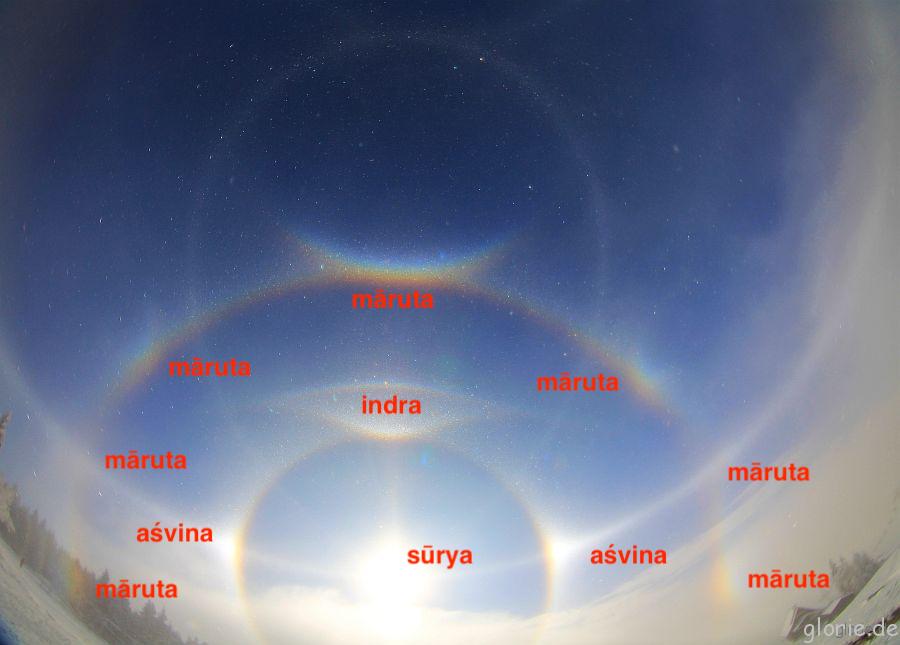
In north-east India, the New Year is celebrated on the day of the liberation of the Heavenly Ganga several thousand years ago. No one knows why.
Apparently, on this day, according to the legends of the northerners who came to the Proto-Indo-Europeans, the rivers of Sapta Sindhava broke up from the ice, which, as we know from the hymn X.75.5 of the Rigveda, includes the Ganga. The sun leaves up the earth on Mandara 11.02, on the third day of the sun's arrival at its summit after the polar night (09.02). The Maruts achieve something on the 63rd departure of the Maruts, as is allegorically stated in the hymn VIII.96.8. Here is how the hymn itself, dedicated to Indra, sounds:
Sixty three times we Maruts are leading you to the places of successive (multiple) sacrifices as ascending dawns (do it). |
May you win your dried victory for us. So we would like to serve you with this offering. || [translation by Butman]
In the Rigveda section I will comment on this hymn. I will briefly explain here that on the 63rd day after 11.02, that is, today, April 14, Indra with the Sun (epithets of Vishnu, Trita, etc.) kill the serpent Vritra-Shushna, free the rivers (and cow-reindeer), including the Ganga, the northernmost of the seven rivers. The Aryans who invaded Hindustan brought with them the name of the Ganga (river of the gods) and the Yamuna (river of the fathers). Some Aryan tribes retained the solar calendar, and 1 Chithiraia (Tamil month) became the first day of the New Year in the Indian state of Tamil Nadu, Puducherry, and among the Tamil population of Singapore, Malaysia and Sri Lanka.
Happy Rongali Bihu!